Description
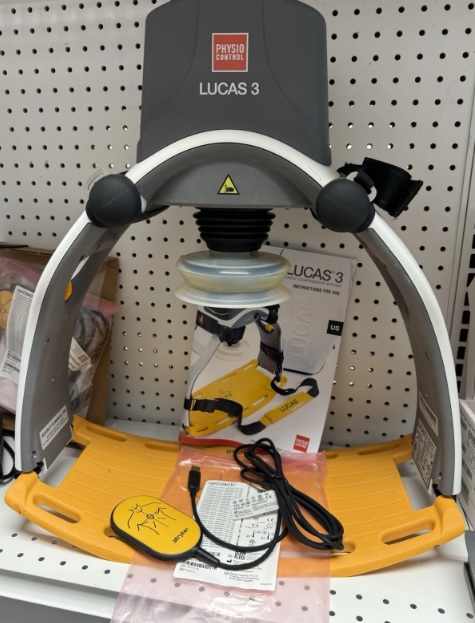
The Stryker Physio-Control LUCAS 3 Chest Compression System is engineered to provide automated, uninterrupted chest compressions for adult patients experiencing sudden cardiac arrest. Designed for use in emergency medical services (EMS), hospitals, and critical care transport, the device helps improve CPR consistency by delivering compressions at a controlled rate and depth in accordance with international resuscitation guidelines.
By automating one of the most physically demanding aspects of resuscitation, the LUCAS 3 enables medical teams to focus on other life-saving interventions such as airway management, medication administration, rhythm analysis, and patient transport. This can improve workflow efficiency and enhance caregiver safety, especially during long-duration CPR or in moving ambulances where manual compressions are difficult to maintain effectively.
The LUCAS 3 provides guideline-consistent compressions at a rate of approximately 102 compressions per minute with a standardized depth, ensuring reliable performance regardless of operator fatigue. This consistency can be critical in improving circulation during resuscitation and maintaining effective perfusion until advanced care is available.
Its lightweight, portable design allows rapid deployment in emergency situations. The system includes a low-profile back plate that can be positioned quickly beneath the patient, while the upper compression frame secures easily for fast startup. This enables clinicians to transition from manual CPR to automated compressions with minimal interruption.
The device is powered by a rechargeable battery and can also operate from an external power source, supporting continuous use during transport or extended resuscitation procedures. Its durable carrying case makes it convenient for pre-hospital emergency response teams and mobile care environments.
The LUCAS 3 also features an intuitive user interface with simple controls, allowing healthcare professionals to activate and manage the device quickly under pressure. Advanced configuration options enable users to customize settings such as compression depth, rate, and pause intervals to match institutional protocols.
To support quality assurance and post-event review, the system can wirelessly connect to compatible data management platforms, enabling clinicians to access and share treatment data after use. This facilitates documentation, protocol evaluation, and continuous improvement in emergency response performance.
Built for demanding medical environments, the LUCAS 3 is designed to withstand challenging field and hospital conditions while maintaining reliable operation. It also helps improve provider safety by reducing the need for rescuers to perform manual compressions during ambulance transport, allowing them to remain secured while the device continues CPR.
Key Features
- Automated mechanical chest compressions for adult CPR
- Guideline-consistent compression rate and depth
- Reduces caregiver fatigue during prolonged resuscitation
- Enables safer CPR during patient transport
- Quick application with low-profile back plate
- Rechargeable battery with external power capability
- User-friendly controls for rapid deployment
- Wireless connectivity for post-event data review
- Portable design with durable transport case
Typical Applications
- Emergency medical services (EMS)
- Ambulance and transport resuscitation
- Hospital emergency departments
- Cardiac catheterization labs
- Intensive care units
- Prolonged cardiac arrest response
In summary, the Stryker Physio-Control LUCAS 3 Chest Compression System is a reliable and efficient automated CPR solution that delivers consistent chest compressions, improves team efficiency, and enhances patient care during critical cardiac emergencies.